Latest NewsSpecialsEvents
Title Image

BRracing – Targa Trophy Event #2 – Aug 27/28 2010

BRracing is participating both as a lead sponsor and an event participant in the exciting Targa Trophy event #2, August 27/28, 2010, in the San Francisco Bay Area.

Targa Trophy - 2010 Event #1 - Mo Satarzadeh

The event comprises a great combination of elements to make it one of the “must do” events for 2010.

A full road rally on some incredible roads – over 300 miles of driving…..this is serious stuff

A full event party and Awards ceremony

A big exotic and speciality car show, and vendor showcase at the W Hotel

Targa Trophy - 2010 Event #1 - Mo Satarzadeh

Here are the full details -

  • Targa Trophy – Bay Area Rally Fest
  • Triple Crown Event #2 – Friday & Saturday August 27 & 28
  • Hosted by W San Francisco & W Silicon Valley
  • Rally Event Details

Rally Event Details

Vehicles – Targa Trophy is open to all makes of exotic and specialty sports cars including Ferrari, Lamborghini, Porsche, Spyker, Mercedes AMG, BMW M, Aston Martin, Bentley, Rolls Royce, Audi, Lotus, Viper, Corvette, select European & Japanese imports, classic exotics, muscle cars and unique one-off sports cars.

Checkpoint Stops – Undisclosed stops throughout San Francisco Bay Area

Host Hotels – W San Francisco & W Silicon Valley

Rally Event Entry Fee – $895 Includes


  • Entry fee covers driver and navigator
  • Team registration private event at W San Francisco Friday night
  • Targa Trophy Event #2 pre party exclusively at venue TBD
  • Massive rally start & car/vendor display open to the public at W San Francisco 7am til 12noon
  • Custom car signage scheme for event cars
  • Special edition Targa Trophy event T-Shirts & accessories
  • Sponsor giveaways
  • Team gift bags
  • Gourmet Breakfast at W San Francisco
  • Special event lunch/car show check point at W Silicon Valley
  • Finale dinner/awards ceremony at W San Francisco
  • $30,000 in prizes + trophies to be distributed between the top 7 finishers
  • Points towards the Targa Trophy Triple Crown Championship series standings
  • Exclusive after party for rally drivers, sponsors, media, friends & VIP’s at W San Francisco

What could be better?  Great event, great cars, friends, cars from all over the US, driving on some great roads and competition.

Don’t delay, sign up NOW and mention BRracing, and get our customer specific discounted entry fee.  BRracing will be there, with several cars in the event directly, with many of our customers participating, and also showing at the vendor showcase and car show.

For more details, see www.targatrophy.com and 2010 Event #2.

Call us, message us, or contact Targa Trophy directly if you have any questions about the event or entry.

You can also see some pictures from EVENT #1 of 2010 in So. CA at our gallery -

http://www.brrperformance.com/gallery2embedded.php

then select “EVENTS”, and Targa Trophy 2010, Event #1 Los Angeles

BRracing will also be sending out more details and a direct invitation to all our customers, starting the week of July 26, 2010.

We will start to release details of the route….but believe me, this has everything in it, all that CA holds dear…..you’ll see the coast, the mountains, the Bay…everything.

Entries ARE LIMITED….and already nearly half the entries have been taken before we even start the promotion…….SIGN UP SOON

264_0

BRracing & Targa Trophy 2010

BREAKING NEWS – July 2010

At BRracing, we strive to bring a complete experience to our customers, and as part of our “events” program for 2010, we have now added a completely new venue and program to the menu.   Many of you have heard of the “1 Lap of America” rally, the “Gumball 3000″ rally, and the BullRun rally…..well, now add another more organized and rally series to your vocabulary.   The Targa Trophy.

BRracing has become the lead SPONSOR of the next round of the Targa Trophy, to be held right here in the Bay Area.

Other main sponsors of this event are the lead participants in the enthusiast automotive market -

- HRE Wheels

- TeamSpeed

- Hotel W (multiple locations directly participating)

- European Car Magazine

- NOS energy drink

- Black & White Car Rental of Beverly Hills

Here are some details of the Targa Trophy series….this is not just an amazing drive in some of the best roads in our areas and the other regions, but a full championship and awards program, with full press coverage.  But, unlike som many other series and events, this is not limited to some exclusive small group, this is open to all true enthusiasts.

  • NORTH AMERICAS ONLY ROAD RALLY EVENT SERIES
  • EXCLUSIVELY HOSTED BY SELECT W HOTELS
  • 3 EVENTS  for 2010- SO CAL, San Francisco, and SCOTTSDALE
  • MORE CARS AND MORE EVENTS PACKED INTO SERIES
  • HUGE KICK OFF & RALLY START AT W San Francisco for the 2nd Round – August 27/28

The ultimate road rally and lifestyle event in North America is growing – bigger and better than ever!

The 4th Annual Targa Trophy Triple Crown Championship is proud to announce its partnership with select destinations of the luxury brand W Hotels and the other leading enthusiast organizations. This year the Targa Trophy Triple Crown Series will test the skill and driving prowess of it’s select participants in 3 key markets with 5 W hotel properties acting as the official host venues, from W Hollywood to W San Diego June 25 & 26, W San Francisco to W Silicone Valley & back August 27 & 28, and ending at W Scottsdale, Arizona October 16 & 17.

This years series builds upon last years success with all new rally driving adventures integrated with amazing automotive and lifestyle events for each stop of the Triple Crown. As always rally drivers objective is to complete a custom-routed path along some of the most scenic backdrops in the U.S. to place as one of the top 7 time finishers of each event for prizes of more than $100,000. Choose to participate in one event, or for true rally competitors, register for the entire 3-event challenge where the Triple Crown winner will be crowned at the finale event in Scottsdale this October.

Don’t expect a typical car event experience. The uniqueness of Targa Trophy is in its marriage of top tier entertainment with authentic automotive lifestyle in the form of nightlife, exclusive vehicle showcases, fashion and music. This years partnership with select W venues ensures a platform that will promise to deliver a world class experience from start to finish and will be one of the event highlights of your year.

The events are everything a car enthusiast could dream of – great driving on amazing roads, awards, huge gathering of special cars, a full car show and vendor showcase, special party and event gathering……don’t just read about this, come join the fun.

BRracing will be sending out the initial invitation…..but don’t delay, as there are only 70 spots, and 30 of them have already been taken by the So. CA participants who are running the full series.

Targa_E_Bay

BRracing – expanding again

BRracing has expanded again….not just in terms of people and resources, but in locations and space.

BRracing has had from the beginning a vision of a three pronged business strategy – service/maintenance, parts, and racing.  As our business has been growing year over year (every year more than 100% growth, and again, even this year (2010), in the first 6 months we have exceeded our sales of all of 2009, which was more than 100% growth over 2008), we have positioned ourselves to have the resources to continue to support that growth.

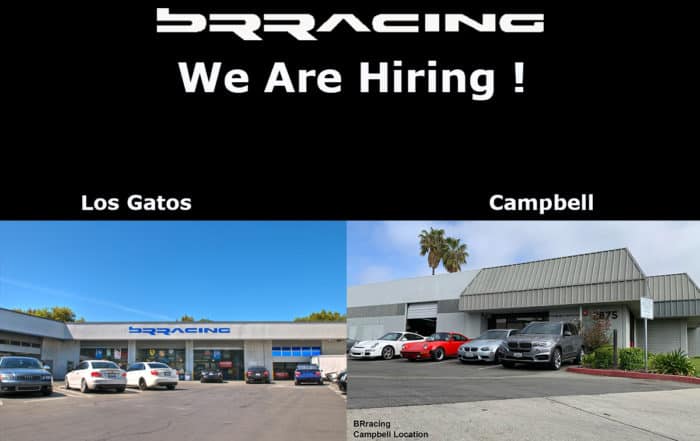
Now, we are in a position to expand again, and provide additional space and capacity.  BRracing has added another location, in Campbell, which now serves multiple functions.  It houses all our cars under our “storage and concierge” program, and will also act as our base for our growing worldwide parts sales.  It has over 2,500 sq ft of floor area, and 3 complete offices for our expanding sales and support staff.  We redid the floors in new epoxy covering, freshened all the offices, and made it have the same BRR feel as our current location.

Here are some pics of the additional location.  Look for BRracing to be adding more locations and space in the near future, as we have exciting news on the racing programs side of our business as well.

BRR Dell location 01Jun10

BRR Dell office 01Jun10

Racing Helmets – what’s a SNELL rating?

As more and more of our customers join us for track days and even racing, the question often comes up – do I need a special helmet to go on track?

The answer is YES, and a car helmet is NOT the same as a motorcycle helment….so, don’t bring your bike helmet to a car event.

The next question is, “do I need a special type of helmet?”    The answer is again YES, it has to be a 2000 or newer helment, meeting a minimum of the SNELL 2000 regulations, and next year (2011), the minimum will be SNELL 2005.   The SNELL regulations are updated every 5 years, and most driving event sanctioning bodies as well as the race sanctioning bodies update the requirements to be in sync w the SNELL ratings.

So, for 2010, you must have a SNELL 2000 or newer approved helmet.

What does the SNELL approval mean?  And, once you read these, you’ll be thankful these exist…as the standards are not “pie in the sky” type requirements, but requirements that could occur during a real accident or incident.

(a) To meet the SA2010 standard, a helmet must be able to withstand a 1450 F degree propane flame for 30 seconds, during which the padding inside the helmet can’t get hotter than 158 F degrees.

(b) The visor shield must resist piercing from a one-gram lead  pellet fired at it in three locations at a speed of 311 mph.  The same shield must also endure that 1450 degree propane torch for 45 seconds without melting.

(c) The Snell standard says the helmet just the head by no more than 275g after being hit with an anvil at speeds as high as 17mph.   Certain related elements subject helmets to three of these hits in a row.  And, the helmet’s structure must remain intact, preventing any any object from making contact with your head.

Helmets get lighter and stronger, but nonetheless, they must provide the kind of protection required in real world situations.

And, if you ask us, “open face or closed face helmet?”, we will always recommend closed face helmets.

So….of all the helmets out there, which ones do we like?    Arai, Bell, and Simpson are our choices.   Arai is the most expensive, usually the lightest, and the tightest fitting.  Bell usually has the best overall fit and comfort, and the largest eyeport.  Simpson has a broad range of styles, is usually lighter than the Bell, but not as light as the Arai.  But, all helmets must be tried on to know if they will work for you.

Cheaper versions of the helmet normally come in group sizes (S, M, L, XL).  More expensive helmet versions come in hat specific sizes ( 7 1/2″).   We just got new helmets again, and we choose Bell Dominator w HANS attachments.

Be Safe….have FUN.

Motor oils – a primer

Almost all the cars we now work on use synthetic oils, but there still seems to be some confusion on what the types of oils are, and what the differences are. Oil is the lifeblood of your engine. The purpose of motor oil is to lubricate and protect your engine from heat and friction; the two major enemies of your engine. Without oil, your engine would overheat and cease working. Your engine might even crack. Motor oil may be the single most important fluid you will put in your engine.

What Is Petroleum Oil?
Crude oil, better known as petroleum oil, is pumped from the earth,  refined, and sold as a lubricant. In spite of the refining process, which is imperfect, contaminants that are not beneficial for your engine will be introduced using petroleum motor oil. Petroleum motor oils contain a different-sized molecular structure that contains properties both beneficial and non-beneficial. Petroleum motor oil has been the predominant automobile lubrication product for generations. If changed regularly, petroleum motor oil will provide a measure of protection for your engine, but not necessarily the best measure of protection.  What are some of the issues with conventional, petroleum motor oil?

* High oil temperature in excess of 240F will break down petroleum oils and cause oxidation, which in turn forms deposits, varnish, and increases wear.

* Low oil temperatures will cause formation of sludge, which can block oil passages.

* Very low temperatures of -40F will make oil too thick to flow at all.

For dependable performance and long-term engine protection in all motor vehicles in all climatic conditions, petroleum oils must be supplemented with expensive additives that prolong the oil service life and reduce the wear to an acceptable level.

What Is Synthetic Oil?
Synthetic motor oil is a laboratory manufactured, custom-designed product that contains a uniform-sized molecular structure and is pure from any of the non-beneficial properties found in conventional petroleum motor oils. Before being introduced to automobiles, synthetic oils were first used in fighter jets. Synthetic oils were first introduced to the consumer market in 1972 and have grown in popularity because of the superiority in protecting today’s high performance engines.

Which is Better?
Every year motor oil companies spend millions promoting their product; the majority of them petroleum motor oils. Although petroleum motor oil will provide adequate protection, there are some reasons why synthetic motor oil is the better choice when it comes to protection for your engine. Why settle for adequate protection? Synthetic motor oils have clear advantages. Let us look at some of these advantages.

Longer Oil Change Intervals
Unlike petroleum motor oil, which must be changed every 3,000 to 5,000 miles, synthetic motor oil can go 6,000 to 10,000 miles between oil changes. Longer oil change intervals, means fewer trips to the shop (hey….that’s us…..you can still come visit at any time) or time spent underneath your car.

Better For The Environment
Because synthetic motor oil lasts about three times longer than petroleum motor oil, change intervals are significantly longer. Fewer oil changes reduce the waste-disposal problem that comes with changing your oil, which leads to a healthier, greener planet for all of us.

Higher Resistance To Breakdown
Petroleum motor oils are prone to boil or vaporize within the normal operating temperature of the engine. This is commonly referred to as breakdown. Once the oil begins to breakdown, it usually results in oxidation, creating hardened oil deposits -more commonly know as sludge- in your engines components. Synthetics by contrast, are able to withstand greater heat temperatures, resulting in greater protection against breakdown.  We can also say that we can immediately tell what type of oil the car has been using just by pulling the valve cover on the motor.  Synthetics produce a cleaner cam area, petroleums produce sludge and grim.  We can also tell, with both types of oil, how often a car has had it’s oil changed….so, if you wonder about wear and protection, yes, we can see it just be looking at the valve cover and cam area.

Provides Superior Heat Protection
Heat is a major enemy of any engine. Heat produces friction, and friction produces wear, and wear reduces the life of your engine. The uniformly smooth structure of synthetic motor oil, free of the contaminates found in conventional petroleum motor oil, provides superior protection against heat, friction, and wear on your engine.

Provides Superior Start-up Protection
Petroleum motor oils contain waxes and paraffins which can thicken when exposed to cold temperatures. Cold petroleum oil makes it difficult for the oil to get from the oil pan to the moving parts of your engine during cold-weather start-ups. Meanwhile, until the oil heats up and is fluid enough to circulate through your engine, damage is occurring to your engine, which over time can reduce the life of your engine. Synthetic motor oil on the other hand, does not contain these waxes and has fluidity properties that allow it to get into your moving parts almost immediately, providing greater protection for your engine.

Conclusion….unless you have a specific reason to use petroleum oil in your car….DON’T.  Use the newer synthetics….your car will love you for it.

StopTech Brakes – what makes them special?

There are lots of brake kits out there….but BRracing has chosen to focus and only promote two manufacturers….Brembo and StopTech.  So, why?  What makes these brakes so special?  And why even do a big brake kit for a street car?

BRR GT3 Stop frt caliper sm

First, most street cars do not come from the factory with a brake system that can really handle the rigors of a track day.  Upgrading the brakes, even if it’s initially just the pads, fluid, and brake lines, may be the single most important upgrade you can make to your car if you plan on tracking your car at any point in the future.  That’s where performance brake manufacturers come in, like StopTech.

StopTech was founded in 1999, and is led by a group of auto enthusiasts and racers.  StopTech was acquired by Centric Parts in 2006, one of the largest suppliers of brake and hydraulic parts in the U.S.  Centric Parts is led by Dino Crescentini, whose name may be familiar to those who follow Speed World Challenge, where he drives a Porsche.  Centric also acquired PowerSlot in 2007, and PowerSlot rotors are now manufactured in the same facilities as StopTech components.

The majority of the components made in StopTech’s Compton CA headquarters are sold for street/track applications, such as big brake kits.  StopTech is also deeply involved in racing, the ultimate proving ground for its products.  Team in both World Challenge and Continental Challenge use StopTech brakes, including Turner Motorsport and GMG, who won the manufacturer’s championship for Porsche.

StopTech sources iron brake rotors from several foundries in North America, and holds all of them to the same high standards for quality, which were refined in part through StopTech’s process of German TUV certifications.  StopTech requires additional content to be used in the iron as well as additional investment in the foundry process to give their rotors maximum durability (they even found that sourcing iron from foundries from some other parts of the world produce rotors that did not meet their product requirements, so they are very specific where their core iron comes from).

StopTech’s AeroRotors feature aerodynamically designed cooling vanes cast into the rotor itself to help reduce rotor temperatures.  The patented vane design elements are created to induce maximum maximum cooling airflow through the brakes when they rotate.  But, they don’t just optimize the airflow, the inner vanes are designed in such a way as to provide equal cooling across the rotor race.  Think…as the air enters the inner rotor face, it is cool.  But, as it passes through the rotor, heat is transferred to the passes air, and the cooling at the outer edge needs to be the same as the inner edge so that there is not a heat gradient created across the face of the rotor.  Hence, the vane design at the inner edge and the vane design at the outer edge are NOT the same.  They also spent time figuring out the leading edge of the vane, so as to optimize the directing of the air through the vanes and rotor passage vs creating turbulence.  So, when you look at a “slotted” rotor….don’t just think of them as all being the same.  Just going from a typical straight vane original equipment rotor design to a directional rotor can have tremendous benefit.  StopTech points out that one racing team using PowerSlot directional vane brakes in the Grand-Am Continental Challenge ST class experienced an 80 degree reduction in rotor temperature compared to OE rotors of the same size at the same track.

If you were to ask StopTech’s position on drilled vs slotted rotors, since they make and sell both, they would tell you that “drilled” rotors will crack sooner than “slotted” rotors.  They’ve done back to back testing where a slotted rotor is substantially more resistant to cracking than a drilled rotor.  One thing that is important with a drilled rotor is the actual hole pattern…it’s not just a bunch of random or equally spaced holes in the rotor.  They must be placed to avoid weaknesses in the part itself.

Now…what about the other parts?   StopTech uses forged calipers for all their products; they believe this gives advantages in grain flow and density versus calipers that are manufactured in a casting process.  The metal quality of a forging also allows a reduction of material from areas of the caliper that experience lower stress during use, which allows StopTech to reduce weight without affecting stiffness.  This is part of the overall performance optimization that goes into each StopTech design.  (This same thought pattern applies to the wheel market, where forged wheels are widely recognized for their strength and weight optimization vs cast wheels).

StopTech emphasizes maximizing stiffness in each of its caliper designs.  Rather than go with monoblok calipers, StopTech uses bolted assemblies; this they believe improves the stiffness of the caliper and is worth the added weight that comes with it.  A stiffer caliper is more efficient in applying braking forces and also allows more even brake pad wear.

If you dive deeper into the design of the StopTech brakes, there are more features that distinguish them from the other players.  Some brake manufacturers actually only make a couple of caliper designs, and just use the caliper mounting hardware to allow the kit to fit each car.  StopTech takes a much different approach.  It has over 35 different caliper designs, and further refines each caliper by sizing the caliper pistons to the size needed for the braking capacity being designed for the particular application.  This can especially be seen in the calipers for the Porsche product line vs the BMW product line, where you have a rear engined car vs a front engined car.  We have seen this in our GT3 kit vs the BMW E82 135i that we worked with them directly on.  Same overall caliper design, but the pistons on the GT3 are a different size than the pistons on the BMW E82 135i kit.  But…go  one step father….the pistons on the same caliper for the BMW 135i are not the same size….it may be a six piston kit, but each piston has been specifically defined in its diameter to produce the right amount of brake clamping capacity.   Hence, a BMW kit is truly a BMW kit, whereas a Porsche kit is truly a Porsche kit.

BRR GT3 Stop frt caliper only sm

What is the difference in the ST kit vs the STR kit?  The STR kit is the full race kit.  The calipers are NOT painted, there is further weight optimization, there are no rubber dust boots around the inner pistons, and there are “quick release” features for fast pad changes.  However, unlike many other manufacturers, the STR kits and the ST kits are exactly the same.  You can run on the street the same setup the leading teams are using on the track.

Finally, we have beaten the crap out of both our BMW E82 135i kit and our Porsche GT3 kit, and they have stood the test….and performed amazingly so.  We have often pulled into the pits and have had our brakes smoking from how hot we have gotten them….but no matter….they just keep on going.  Not only do they perform, they last.

Tires – Which ones for track duty?

Even with the great progression tires have made over the last period of years, the OEM and high performance tires are really no match for the track.  Or, you have a decision to make….destroy a perfectly good set of street tires every time you go to the track, and still not have the right set you need for the abuse that gets dished out at the track.  You wanted to go to the track to drive fast….and the tires can either be the biggest help, or the biggest hinderance….your choice.  But, if you decide to get a set of dedicated track tires….which ones?

We will put tires into three categories.

- high performance street tires (max performance, or max summer performance)

- DOT-R tires (street legal, but really dedicated track tires)

- Racing slicks (NOT street legal, and really only for racing cars that have suspension that can handle the loads that will be generated)

Hoosier1

As we stated in the opening, most high performance street tires are just that, high performance street tires.  So, our focus will be on the DOT-R track tires.  These are very sticky, track oriented tires.  They are DOT street legal, and many track users commute to the track and back with them on the car, and then switch back to their street tires when they return home.  But, they are certainly not tires you would ever want to be caught on the street with if any rain arrived……oh no (think of driving on ice and you have the right picture).

So, you now want a set of track tires….but which ones?  There are several tire manufacturers that produce DOT-R tires, and we will review some of those here that we have direct experience with.  Also, if you are thinking of using DOT-R tires on your car, and you want to compete in some race series (either autocrossing or road racing), make sure to check the rules before you jump in.  Most series have strict rules on which tires are allowed to be used, or will allocate points against you if your run DOT-R tires, and you should also make sure you understand what that series defines as DOT-R tires….as they do not define them all the same (it used to be that an easy rule was that DOT-R tires were tires w a durometer reading of less than 150….but not the case anymore).

Toyo R888 (rating = 8)

This is one of our favorite track tires.  Very predictable, great grip, little squeal at the limit, very progressive break-away (this is a huge point to us as you learn the limits of your driving and your car), fair price (for a DOT-R tire), and they generally can last quite a long time (we have seen them last for a whole year, meaning about 6 – 8 track days or full heat cycles….but, do not judge their life by simply looking at the amount of tread left….be very aware of heat cycles on track tires…..we had a set of Toyo R888’s that had seen 6 track days, and still had a good amount of tread left, but would have come apart if used for one more track day, as the inner wall had broken down due to the number of heat cycles the tires had seen).

Hoosier R6 (rating = 10)

This is the pinnacle of track tires….they produce amazing amounts of grip, they are very forgiving, very predictable break away.  If you want fast times….these are the best you can do.  But, these will NOT last long, and with their price, they will produce a death grip on your bank account (they are like a drug…you won’t be able to live without them once you make the plunge to use them….so, tread lightly here).

BFGoodrich g-Force R1 (rating = 6)

This is a very good track tire.  Great amount of grip….but, before you go slap a set of these on your car, you better ensure you either rank yourself as one of the best drivers on the track, or you have an amazing track insurance policy for your car, and you don’t care if you wrap your car around a concrete barrier.  They produce the grip, but when they decide to let go…..woo baby…..your gone.  No notice, no change in squeal or noise or feel….just woops…..and hang on.  Very stiff sidewall means you can drive these tires very hard….but they are a very hard tire to drive hard and fast.  You’ve been warned.

Michelin Pilot Sport CUP (rating = 7)

Great tire, and if you’re looking for a tire to get you to the track and back, and take the abuse at the track as well….then this is your friend.  Everyone knows you mean business when you have a set of these on the car, and they are very predictable, produce good amounts of grip, but you best qualify for the AMEX unlimited credit line if you want to use these regularly.    They are great….but greatness comes at a price.

Yokohoma Advan A048 (rating = 5)

This is the brother to the tire that BRracing first raced on, for our whole first season.  At the time, we thought the tire to be great.  Fair price, lasted quite a long time, produced good amounts of grip….but I think we were turned onto these tires by one of our competitors…..as they had some nasty elements to them, and no one told us.  This is still true w the new generation of the Yokohoma tire.  Good grip. but they squeal at the limit, and they also do NOT have a progressive break away.  But, if you want to learn drifting and car control, then sign yourself up to a set of these…and hang on.

Brakes – “bedding” – what is it?

BRracing often takes extra steps when we are installing brakes (pads and rotors) on our customers cars, and we “bed” the new pads and rotors.  This is not something most shops do, or know how to do properly, but when we do it, we often get questions from our customers about what this process is and what does it do.   So, to put the mystery aside, and to help in the understanding of the process, here is the technical background on “bedding”.  Also note, that there is not just one bedding process….it also depends on the type of pads being “bedded”….semi-metallic pads vs organic pads take a different process.  Same theory, but different process.

IMG_0451

In order for any brake system to work optimally, the rotors and pads must be properly bedded-in, period. This process can also be called break-in, conditioning, or burnishing, but whatever terminology you choose, getting the brakes properly bedded-in and keeping them that way is critical to the peak performance of the entire brake system, and something that is necessary whether you are doing new brakes for the street, or for the track….both benefit.

However, understanding why the rotors and pads need to be bedded-in is just as important as the actual process. If one understands what is happening during the bed-in process, they can tailor the process to specific pads, rotors, and/or driving conditions. For this reason, we will talk about the generic bed-in overview pertaining to all brake systems, but follow with examples for application-specific bed-in procedures to fit most circumstances.

What is brake pad “bed-in” anyway?

Simply stated, bed-in is the process of depositing an even layer of brake pad material, or transfer layer, on the rubbing surface of the rotor disc (both sides). That’s it. End of discussion. Ok, not really, but although bed-in is quite basic in definition, achieving this condition in practice can be quite a challenge, and the ramifications of improper or incomplete bed-in can be quite a-a-n-n-o-o-y-y-i-i-n-n-g-g.

Abrasive friction and adherent friction

There are two basic types of brake pad friction mechanisms: abrasive friction and adherent friction . In general, all pads display a bit of each, with abrasive mechanisms dominating the lower temperature ranges while adherent mechanisms come more into play as pad temperature increases. Both mechanisms allow for friction or the conversion of Kinetic energy to Thermal energy, which is the function of a brake system, by the breaking of molecular bonds in vastly different ways.

The abrasive mechanism generates friction or energy conversion by the mechanical rubbing of the brake pad material directly on the rotor disc. In a crystalline sense, the weaker of the bonds in the two different materials is broken. This obviously results in mechanical wear of both the pad and the rotor. Consequently, both pads and rotors are replaced when they are physically worn to their limit and are too thin to endure further service.

The adherent mechanism is altogether different. In an adherent system, a thin layer of brake pad material actually transfers and sticks (adheres) on to the rotor face. The layer of pad material, once evenly established on the rotor, is what actually rubs on the brake pad. This allows the same material to interact, and the same coefficient of friction, improving the overall braking capacity vs when “bedding” is not done or not done properly. The bonds that are broken, for the conversion of Kinetic to Thermal energy, are formed instantaneously before being broken again. It is this brake pad-on-transferred brake pad material interaction on a molecular level that yields the conversion process.

With the adherent mechanism there is much reduced rotor wear as compared to abrasive mechanism, but it’s not a free lunch – pads now become the primary wear element in the braking system. And even though rotors are not mechanically worn down with adherent systems, they still will need to be replaced on a regular basis due to cracking reaching a point of failure if they are exposed to intense, repetitive thermal cycling. This is why race teams throw out rotors that are actually as thick or thicker than when they were brand new. It’s due to the an adherent brake pad transfer layer!

The all-important transfer layer

As stated above, the objective of the bed-in process is to deposit an even layer of brake pad material, or transfer layer , on the rubbing surface of the rotor disc. Note the emphasis on the word even, as uneven pad deposits on the rotor face are the number one, and almost exclusive cause of brake judder or vibration.

Let’s say that again, just so there is no misunderstanding. Uneven pad deposits on the rotor face are the number one, and almost exclusive cause of brake judder or vibration.

It only takes a small amount of thickness variation, or TV, in the transfer layer (we’re only talking a few ten thousandths of an inch here) to initiate brake vibration. While the impact of an uneven transfer layer is almost imperceptible at first, as the pad starts riding the high and low spots, more and more TV will be naturally generated until the vibration is much more evident. With prolonged exposure, the high spots can become hot spots and can actually change the metallurgy of the rotor in those areas, creating “hard” spots in the rotor face that are virtually impossible to remove.

Bedding fundamentals

In general, bed-in consists of heating a brake system to its adherent temperature to allow the formation of a transfer layer. When both the pad and rotor have achieved the proper, hot, operating temperature, the pad material actually transitions into a “plasma”, and the transfer of material is that applied and adhered to the rotor surface.  The bedding process then continues, but not at the same “hot” temperatures, to continue the transfer process and to ensure the evenness of the applied layer.  The brake system is then allowed to cool without coming to rest, resulting in an even transfer layer deposition around the rotor circumference. This procedure is typically repeated two or three times in order to ensure that the entire rotor face is evenly covered with brake pad material. Sounds easy, right? Well, it can be if you have the proper information.

Because the adherent temperature range for brake pads varies widely (typically 100°F-600°F for street pads and 600°F-1400°F for race pads), each bed-in needs to be application-specific. One could try to generate a one-size-fits-all procedure, but too little heat during bed-in keeps the material from transferring to the rotor face while overheating the system can generate uneven pad deposits due to the material breaking down and splotching (that’s a highly technical term) on to the rotor face.

In summary, the key to a successful bed-in is to bring the pads up to their adherent operating temperature in a controlled manner and keep them there long enough to start the pad material transfer process. Different brake system designs, pad types, and driving conditions require different procedures to successfully accomplish the bed-in. The recommended procedures below should provide you with the information you need to select the bed-in procedure appropriate for your application.

Can “bedding” only be done once, when the pads and rotors are new?  Nope, the same process can be done during the pads and rotors life, and we have certainly seen on some organic race pad applications where the track use results in uneven pad deposits, and you get the feared brake shudder….so, you can go thru the “bedding” process again to ensure the application is even and ready for use again.  If the pad deposits are too great, the rotors may need to be burnished or freshen before the next step of bedding can be repeated or done again.

For street applications….the bedding can be done on the street, by going thru a general heating up process (3 or 4 stops from 30 mph down to 5 mph, then immediately repeating), then the hard application process (3 or 4 stops from 60mph down to 10mph using thresshold braking….during this process the brakes should actually be smoking…..do not fear this…this is good), then a cooling process of braking (another 3 or 4 stops from 30mph to 5mph with moderate braking pressure).  Finally, the brakes now need to cool uniformly, and you should drive at least a mile without using the brakes at all, and also not let the car come to rest (heat soak could occur due to the heat in the pads and rotors).

Another hint for track users….when you come off the track, do NOT bring your track car into the pits without using the cooling down lap to really cool the motor and brakes.  If you come off a hot lap and immediately head for the pits, but you’re still playing a hot lap on the last lap, and you then roll into the pits as you are so excited from your last set of flyers…and then park the car, the heat in the brakes can “heat soak”, and cause the rotors to warp….this is also why when you are at the track you NEVER put on the parking brake when you park your car or vehicle in the pits….lesson learned from direct experience.

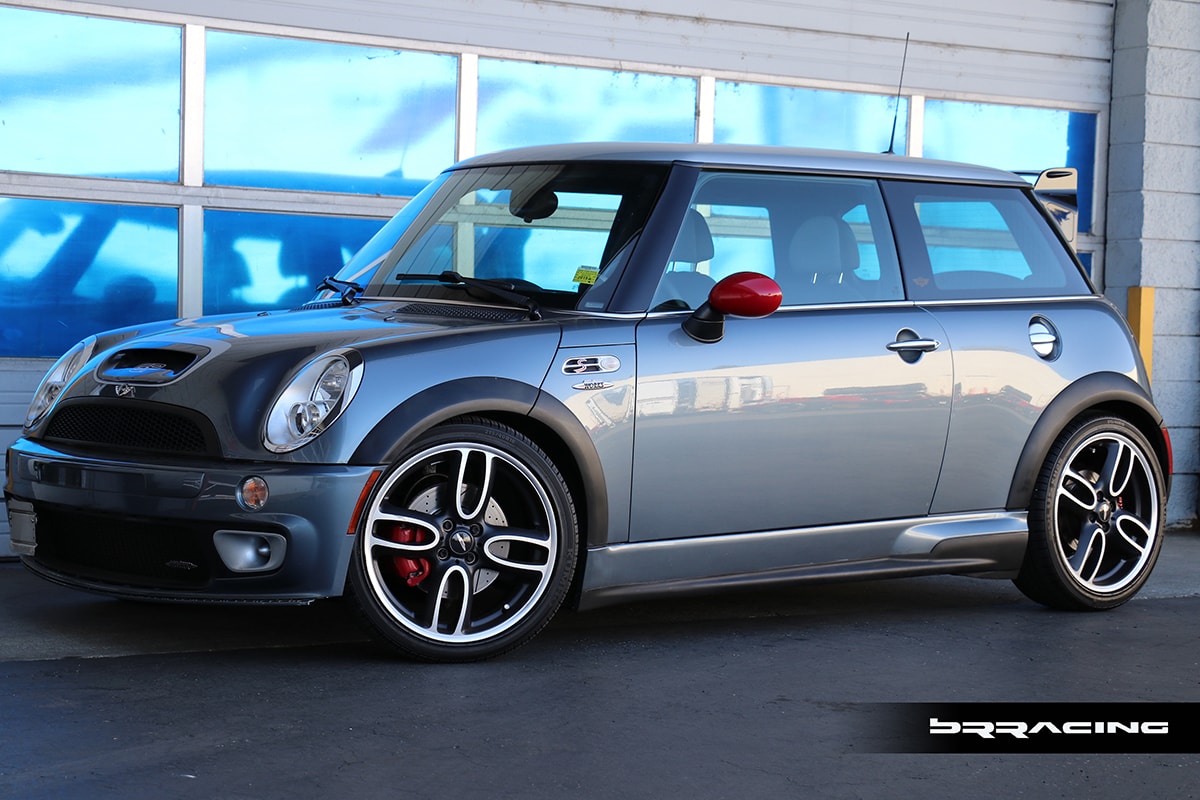
BRracing’s Project MINI Cooper S (R53) for SALE

The BRracing project MINI Cooper S R53 is now up for sale.

We had fully developed our MINI into a real “looker”, as well as a great combination daily driver and track weapon.  But, we need to move on to more new project cars, so are selling the last of our beloved “TWINS” (we had purchased 2 MINI MCS’s, and sold one in the summer of 2008, and are now selling its sister car).  This car has the “best” of the best in the market installed, and tested.  Over $15,000 in aftermarket upgrades and enhancements, from performance to interior and exterior modifications.   Clean, stored inside, detailed regularly…..and yes, it has been to the track many times (it fears no one).  Never damaged, never wrecked.  One owner (us).  Car had 4 year/50k warranty…but is now out of warranty.

MINI R53 rolling angle

Here are the details on the car:

Year = 2006

Model = MINI Cooper S R53

Engine = 4 cylinder, inline, supercharged

Mileage = 53,000

Condition = Excellent

Asking price = $19,999 OBO

Color = Dark Silver Metallic

Details and modifications -

2006 MINI Cooper S

Interior

- No sunroof (custom ordered car)

- Sport Gauge package

- Cloth sport seats

- MINI Challenge alcantara steering wheel, hand brake, shift boot

- Pedal package

- Manual transmission w LSD

- Tinted windows, side and rear

- Ipod integration, elec windows w “one touch”, AC, elec locks, remote key, Harman Kardon radio/CD player, DSC, front fog lights, XENON lights, on board computer, anti-lock brakes, traction control, driver and passenger air-bags, side impact air-bags, TPMS flat tire monitoring system, speed sensitive intermitent wipers, split fold down rear seats, power exterior mirror control

Exterior

- OZ Ultraleggear 18″ black wheels

- Yokohoma S.drive tires 225/35/18 (nearly new)

- Black roof

- Black front grill, intake

Suspension

- Dinan stage II suspension (struts, shocks, springs)

- Alta 19mm rear adjustable anti roll bar w adj sway bar end links

- Powerflex transmission mounts, engine mounts, front lower control arm bushings

- Brembo big brake kit (front), slotted rotors, stainless steel brake lines (all corners)

Engine

- Alta Performance Intercooler

- Sampco radiator hose package

- Alta Intercooler hoses

- Alta intake hose kit

- Dinan spark plug wire set

- Oil catch can w stainless steel hoses

- Dinan cold air intake (CAI)

- Custom made (BRracing) rear twin tip exhaust system

- Dinan upgraded fuel system (pump, regulator, pickups)

- Alta 15% SC reduction pulley (type II)

- Detroit Tuned SC retention cable

IMG_1709

IMG_1712

IMG_1718

Stoptech ST-40 kit now available for BMW E82 135i

We have heralded the benefits of the Stoptech Big Brake Kit (BBK), as installed on our BMW E82 135i project car, and the STR-60 kit installed on our Porsche 2010 997.2 GT3.

So, now we introduce the new ST40 big brake kit for the BMW E82 135i for the rear, to go along with the current ST60 front kit.

Stoptech ST40 caliper

And, if you wonder if reality supports the talk, look no further than the Speed World Challenge Race at Long Beach in April 2010.  Here is a quote from Dino Crescinti, driving a GT3 race car from 6th to a 2nd place finish -

“Dino Crescentini, of Manhattan Beach, Calif., sliced his way through the GT field in his No. 4 Centric Parts/Stoptech/GMG Porsche 911 GT3 from his sixth starting position to finish as the runner-up to Wittmer. Crescentini made up two positions by the first turn, and held that position until lap 8 when he was passed by Ron Fellows in the No. 2 Carlisle Companies/Cragar Chevrolet Corvette and dropped to fifth. 

On lap 17, Crescentini began his charge. He passed Fellows for fourth, and then picked off Boris Said in the No. 3 Applied Comp Solutions/Sun Microsystems Ford Mustang GT for third on lap 20. He slipped past Brandon Davis in the No. 1 Applied Comp Solutions Ford Mustang GT for second on lap 23, but wasn’t able to significantly close the gap on Wittmer.

The charge through the top-five earned Crescentini the MTM Special Ops Best Move of the Race award.

“I was a bit apprehensive at the start,” Crscentini said. “I couldn’t see the start lights and needed to have my crew call the start. The car was the same at the end as it was at the very beginning. It was all about out-braking everyone today. In every corner on every lap, I was able to out-brake people. I can’t out-power them so I had to out-brake them.

“I had the most fun today I’ve ever had in a race car. It was just so busy the entire time and such good racing.””

We have sold plenty of kits of the Stoptech ST-60 front BBK, to solve the inherent braking issues well understood on the front of the car, and now, with the introduction of the ST-40 kit, you can have a complete, balanced solution for the ultimate braking system available for the BMW E82 135i.

The new ST-40 kit includes -

  • Fully forged aluminum construction
  • ALL finished parts are 100% leak down and pressure tested to 2500 PSI
  • ST-40 uses standard FMSI D372 pad
  • Specific combination of 8 piston sizes that match kit to vehicle application
  • Differential piston sizes minimize pad taper
  • Dust boots are standard
  • Weight: 7.94 lb (3.6 kg) unloaded
  • Same caliper used by top Speed® World Challenge and Grand-Am Cup Teams
  • 2 piece 345mm x 28mm rotors

Again, due to the special relationship with Stoptech that BRracing has developed, we have an initial set of kits at a special introductory price…..contact us for details (408-356-1515 or brracing@gmail.com)

?Do you have any questions about your car? Curious to see what's possible? Submit Inquiry, and we'll get back to you quickly.
cartWe carry the full line of performance parts for european cars. We accept Visa, MasterCard, AmEx, Discover, and Paypal.
emailYou can reach BR Racing at 408.356.1515. You can also Submit Inquiry, or simply email us at brracing@gmail.com.